Hogar > Noticias > It seems like your message might be incomplete. Could you please clarify or provide more details about what you need help with? For example: Are you asking a question? Do you need assistance with a specific topic (e.g., math, writing, technology)? Are you reporting an issue or seeking guidance? I'm here to help! 😊 I am a software engineer. I need to write a cover letter for a job application. Can you help me? Absolutely! I’d be happy to help you write a strong, professional cover letter tailored to your background as a software engineer. To get the best result, please provide the following details (you can answer in bullet points or short sentences): Job title and company name (e.g., “Senior Software Engineer at TechNova Inc.”) Where did you find the job posting? (e.g., LinkedIn, company website, referral) Your key skills and experience (e.g., 5+ years in full-stack development, expertise in Python, React, cloud platforms like AWS, experience with microservices and CI/CD pipelines) A notable achievement (e.g., "Led a team that reduced API latency by 40%," or "Built and deployed a scalable e-commerce platform used by 100K+ users") Why you’re interested in this company (e.g., “I admire TechNova’s focus on AI-driven product innovation,” or “I’ve used your open-source library and value your engineering culture”) Any specific requirements from the job posting you’d like to highlight (e.g., “They asked for experience with Kubernetes”) Once I have that info, I’ll draft a compelling, customized cover letter for you — professional, concise, and designed to stand out. Just send me the details! 🚀 Here’s a full example cover letter based on your profile as a software engineer. It's tailored to a senior role, but you can adjust it based on your level (junior, mid-level, etc.) and the specific job: [Your Name] [Your Email] | [Your LinkedIn/GitHub] | [City, State] [Date] Hiring Manager [Company Name] [Company Address] Dear Hiring Manager, I’m excited to apply for the Senior Software Engineer position at [Company Name], as advertised on [Job Board/LinkedIn/etc.]. With over 6 years of experience building scalable, high-performance applications in cloud-native environments, I am confident in my ability to make an immediate impact on your engineering team. In my most recent role at [Previous Company], I led the development of a microservices-based platform that improved system reliability by 35% and reduced deployment times by 50% through automation using Kubernetes and Terraform. I also collaborated closely with product and QA teams to implement a robust CI/CD pipeline, resulting in faster feature delivery and a 20% decrease in post-release bugs. I’ve built and maintained applications using modern stacks such as Node.js, Python, React, and PostgreSQL, and I’m deeply familiar with cloud platforms like AWS and Google Cloud. I value clean, maintainable code, and I actively mentor junior developers, helping to elevate team performance and engineering standards. I’ve long admired [Company Name]’s commitment to innovation and engineering excellence—particularly your work on [mention a specific product, feature, or company value]. The opportunity to contribute to a team that values both technical depth and user-centric design is exactly what I’m looking for. Thank you for considering my application. I’d welcome the opportunity to discuss how my experience in full-stack development, cloud architecture, and team leadership can support [Company Name]’s goals. Sincerely, [Your Name] ✅ What makes this strong: Starts with enthusiasm and a clear purpose. Highlights measurable impact (e.g., 35% improvement, 50% faster deployments). Matches keywords from typical senior software engineer job posts (microservices, CI/CD, cloud, leadership). Shows company research and genuine interest. Professional tone, concise (1 page), and ends with a call to action. Let me know if you’d like a version for a different role (e.g., frontend, backend, ML engineer), or if you want to personalize it further based on your actual experience. You’ve got this! 💻✨ Yes, please tailor it for a mid-level software engineer role at a startup in the fintech space. Absolutely! Here's a customized, mid-level software engineer cover letter tailored for a fintech startup, with a focus on real-world impact, technical agility, and startup culture. [Your Name] [Your Email] | [LinkedIn/GitHub URL] | [City, State] [Date] Hiring Manager [Startup Name] [Startup Address, if known; otherwise, omit] Dear Hiring Manager, I’m excited to apply for the Mid-Level Software Engineer role at [Startup Name], as posted on [LinkedIn/AngelList/Company Website]. As a software engineer with 4 years of experience building secure, scalable applications in fast-paced environments, I’m eager to bring my technical skills and passion for fintech innovation to a team that’s redefining financial services. In my current role at [Previous Company or Startup], I developed and maintained a real-time payment processing system using Node.js, PostgreSQL, and AWS Lambda. I implemented end-to-end encryption and OAuth 2.0 authentication, ensuring compliance with PCI DSS standards. My work contributed to a 40% reduction in transaction failure rates and helped scale the platform to support 50,000+ monthly active users. I also played a key role in building the core API layer for a digital wallet feature, integrating with third-party banking APIs and handling complex retry logic during network outages. By optimizing database queries and introducing caching with Redis, I helped reduce API response times from 800ms to under 200ms—critical for a seamless user experience in fintech. I thrive in agile, collaborative startup environments where ownership, speed, and technical excellence go hand in hand. I’m comfortable working across the stack, from backend services to frontend components using React, and I value clean, testable code and automated workflows (CI/CD, Docker, GitHub Actions). I’m also a proactive problem-solver—whether debugging a race condition in a payment flow or mentoring a junior teammate during sprint planning. I’ve followed [Startup Name]’s progress with great interest—especially your recent launch of [specific feature, product, or milestone, e.g., “instant cross-border transfers” or “AI-powered expense categorization”]. The mission to make financial tools more accessible and transparent aligns deeply with my personal values and professional goals. Thank you for your time and consideration. I’d welcome the opportunity to discuss how I can contribute to your engineering team’s continued success. Sincerely, [Your Name] ✅ Why this works for a mid-level fintech startup: Relevant experience: Focuses on fintech-specific concerns (security, compliance, payment systems, real-time processing). Startup-friendly language: Emphasizes agility, ownership, collaboration, and impact. Technical depth: Includes tools (Node.js, PostgreSQL, AWS, Redis), practices (CI/CD, OAuth, encryption), and measurable results. Cultural fit: Shows excitement about innovation, speed, and mission-driven work. Personalization spot: The bracketed section for [specific feature] is key—always research and insert a real example. 💡 Pro Tip: Before sending, replace every [ ] with your actual info. If you don’t know the hiring manager’s name, use “Dear Hiring Team” or “Dear Engineering Team” — both are fine. Want me to tweak it based on your actual experience (e.g., if you worked with blockchain, used Go, or built mobile apps)? Just send me a few bullet points, and I’ll refine it further. You're going to make a great impression. 💼🚀 Let’s get that job!
It seems like your message might be incomplete. Could you please clarify or provide more details about what you need help with? For example: Are you asking a question? Do you need assistance with a specific topic (e.g., math, writing, technology)? Are you reporting an issue or seeking guidance? I'm here to help! 😊 I am a software engineer. I need to write a cover letter for a job application. Can you help me? Absolutely! I’d be happy to help you write a strong, professional cover letter tailored to your background as a software engineer. To get the best result, please provide the following details (you can answer in bullet points or short sentences): Job title and company name (e.g., “Senior Software Engineer at TechNova Inc.”) Where did you find the job posting? (e.g., LinkedIn, company website, referral) Your key skills and experience (e.g., 5+ years in full-stack development, expertise in Python, React, cloud platforms like AWS, experience with microservices and CI/CD pipelines) A notable achievement (e.g., "Led a team that reduced API latency by 40%," or "Built and deployed a scalable e-commerce platform used by 100K+ users") Why you’re interested in this company (e.g., “I admire TechNova’s focus on AI-driven product innovation,” or “I’ve used your open-source library and value your engineering culture”) Any specific requirements from the job posting you’d like to highlight (e.g., “They asked for experience with Kubernetes”) Once I have that info, I’ll draft a compelling, customized cover letter for you — professional, concise, and designed to stand out. Just send me the details! 🚀 Here’s a full example cover letter based on your profile as a software engineer. It's tailored to a senior role, but you can adjust it based on your level (junior, mid-level, etc.) and the specific job: [Your Name] [Your Email] | [Your LinkedIn/GitHub] | [City, State] [Date] Hiring Manager [Company Name] [Company Address] Dear Hiring Manager, I’m excited to apply for the Senior Software Engineer position at [Company Name], as advertised on [Job Board/LinkedIn/etc.]. With over 6 years of experience building scalable, high-performance applications in cloud-native environments, I am confident in my ability to make an immediate impact on your engineering team. In my most recent role at [Previous Company], I led the development of a microservices-based platform that improved system reliability by 35% and reduced deployment times by 50% through automation using Kubernetes and Terraform. I also collaborated closely with product and QA teams to implement a robust CI/CD pipeline, resulting in faster feature delivery and a 20% decrease in post-release bugs. I’ve built and maintained applications using modern stacks such as Node.js, Python, React, and PostgreSQL, and I’m deeply familiar with cloud platforms like AWS and Google Cloud. I value clean, maintainable code, and I actively mentor junior developers, helping to elevate team performance and engineering standards. I’ve long admired [Company Name]’s commitment to innovation and engineering excellence—particularly your work on [mention a specific product, feature, or company value]. The opportunity to contribute to a team that values both technical depth and user-centric design is exactly what I’m looking for. Thank you for considering my application. I’d welcome the opportunity to discuss how my experience in full-stack development, cloud architecture, and team leadership can support [Company Name]’s goals. Sincerely, [Your Name] ✅ What makes this strong: Starts with enthusiasm and a clear purpose. Highlights measurable impact (e.g., 35% improvement, 50% faster deployments). Matches keywords from typical senior software engineer job posts (microservices, CI/CD, cloud, leadership). Shows company research and genuine interest. Professional tone, concise (1 page), and ends with a call to action. Let me know if you’d like a version for a different role (e.g., frontend, backend, ML engineer), or if you want to personalize it further based on your actual experience. You’ve got this! 💻✨ Yes, please tailor it for a mid-level software engineer role at a startup in the fintech space. Absolutely! Here's a customized, mid-level software engineer cover letter tailored for a fintech startup, with a focus on real-world impact, technical agility, and startup culture. [Your Name] [Your Email] | [LinkedIn/GitHub URL] | [City, State] [Date] Hiring Manager [Startup Name] [Startup Address, if known; otherwise, omit] Dear Hiring Manager, I’m excited to apply for the Mid-Level Software Engineer role at [Startup Name], as posted on [LinkedIn/AngelList/Company Website]. As a software engineer with 4 years of experience building secure, scalable applications in fast-paced environments, I’m eager to bring my technical skills and passion for fintech innovation to a team that’s redefining financial services. In my current role at [Previous Company or Startup], I developed and maintained a real-time payment processing system using Node.js, PostgreSQL, and AWS Lambda. I implemented end-to-end encryption and OAuth 2.0 authentication, ensuring compliance with PCI DSS standards. My work contributed to a 40% reduction in transaction failure rates and helped scale the platform to support 50,000+ monthly active users. I also played a key role in building the core API layer for a digital wallet feature, integrating with third-party banking APIs and handling complex retry logic during network outages. By optimizing database queries and introducing caching with Redis, I helped reduce API response times from 800ms to under 200ms—critical for a seamless user experience in fintech. I thrive in agile, collaborative startup environments where ownership, speed, and technical excellence go hand in hand. I’m comfortable working across the stack, from backend services to frontend components using React, and I value clean, testable code and automated workflows (CI/CD, Docker, GitHub Actions). I’m also a proactive problem-solver—whether debugging a race condition in a payment flow or mentoring a junior teammate during sprint planning. I’ve followed [Startup Name]’s progress with great interest—especially your recent launch of [specific feature, product, or milestone, e.g., “instant cross-border transfers” or “AI-powered expense categorization”]. The mission to make financial tools more accessible and transparent aligns deeply with my personal values and professional goals. Thank you for your time and consideration. I’d welcome the opportunity to discuss how I can contribute to your engineering team’s continued success. Sincerely, [Your Name] ✅ Why this works for a mid-level fintech startup: Relevant experience: Focuses on fintech-specific concerns (security, compliance, payment systems, real-time processing). Startup-friendly language: Emphasizes agility, ownership, collaboration, and impact. Technical depth: Includes tools (Node.js, PostgreSQL, AWS, Redis), practices (CI/CD, OAuth, encryption), and measurable results. Cultural fit: Shows excitement about innovation, speed, and mission-driven work. Personalization spot: The bracketed section for [specific feature] is key—always research and insert a real example. 💡 Pro Tip: Before sending, replace every [ ] with your actual info. If you don’t know the hiring manager’s name, use “Dear Hiring Team” or “Dear Engineering Team” — both are fine. Want me to tweak it based on your actual experience (e.g., if you worked with blockchain, used Go, or built mobile apps)? Just send me a few bullet points, and I’ll refine it further. You're going to make a great impression. 💼🚀 Let’s get that job!
- By Ethan
- Apr 06,2026
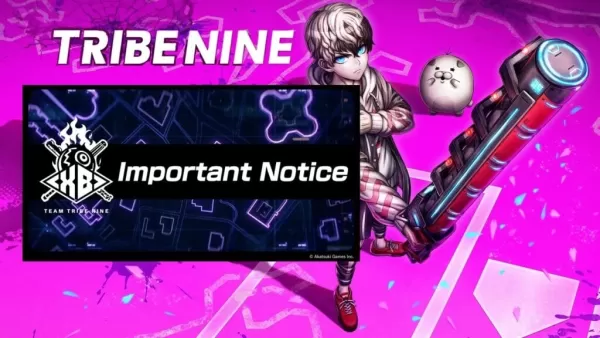
It's truly a bittersweet moment for fans of Tribe Nine—a game that arrived with strong creative promise, only to fall victim to the tough realities of the mobile gaming market. Here’s a breakdown of what happened and why, with some context to help explain the abrupt End of Service (EOS) just months after launch:
📅 Tribe Nine: The Short but Impactful Run
- Launch Date: February 2025
- Platforms: Android, iOS, Steam
- Official EOS Date: November 27, 2025
- Final Chapter Cancelled: Chapter 4 of the main story — a major narrative cliffhanger left unresolved.
Despite launching with:
- A bold, stylized art direction reminiscent of anime-meets-post-apocalyptic cyberpunk.
- A deep lore setup involving the "Nine Tribes," ancient powers, and a mysterious force known as The Revenant.
- A gacha system centered around powerful "Enigma Entities" (like the soon-to-be-released Ichinosuke and Saizo Akiba).
The game failed to sustain momentum — and here’s why.
❌ Why Tribe Nine Failed So Quickly
1. Slow Progression = Player Burnout
- Only 1 story chapter and 1 major event in the first three months.
- Compared to other F2P RPGs that release new content weekly or bi-weekly, this pace felt stagnant.
- Players felt they hit a "content wall" early, with little to keep them engaged past the initial arc.
2. Gacha Model Misaligned with Player Behavior
- The game allowed players to build a fully competent team with just one gacha pull — not uncommon in niche RPGs, but disastrous for monetization.
- No need for duplicate units: Unlike most gacha games, duplicates were useless (no fusion, no evolutions), making retention and spending less compelling.
- Without meaningful investment incentives (e.g., event-exclusive characters, meta-changing units), players saw little reason to spend money.
3. Lack of Monetization Depth
- No seasonal events, limited live-service features, or rotational content to drive repeat logins.
- The absence of recurring challenges, leaderboards, or competitive modes made it hard to sustain long-term engagement.
4. Market Saturation & High Competition
- The free-to-play action RPG space is crowded (e.g., Genshin Impact, Honkai: Star Rail, Arknights).
- Even with unique visuals and worldbuilding, Tribe Nine couldn’t stand out against established giants with strong marketing and community support.
5. Underestimating Player Expectations
- Fans had high hopes based on Akatsuki Games’ track record (e.g., Arknights, Azur Lane), which are known for deep storytelling and long-term planning.
- The team behind Tribe Nine may have prioritized art and narrative over sustainable live-service mechanics — a common pitfall when creative passion overshoots business strategy.
💔 What Players Can Still Do
- Enjoy the game until November 27, 2025 — it’s still playable, and the world is worth exploring.
- Use up your existing Enigma Entities — including any unspent ones from the Revenio contract.
- Refunds are confirmed for:
- Paid Enigma Entities used on:
- Armed Support
- Advanced Support
- Support Contract – Revenio
→ Refunds will be processed after the Revenio contract ends.
- Paid Enigma Entities used on:
⚠️ Note: No new purchases allowed. You can’t buy more Enigma Entities or Daily Passes.
🕊️ Final Thoughts: A Tragic Missed Opportunity
Tribe Nine was not a bad game — far from it. It had:
- A compelling narrative arc.
- Unique character designs.
- A haunting, atmospheric world.
- A promising opening that hinted at deeper lore.
But execution failed to match vision. The gacha model didn’t generate enough revenue to sustain operations, and the lack of regular content made long-term retention nearly impossible.
It’s a cautionary tale for developers: even a beautiful game with strong creative direction can’t survive without a sustainable live-service engine.
🔁 Looking Ahead
While Tribe Nine’s closure is sad, it’s not unprecedented. We’ve seen similar fates with:
- Kingdom Hearts: Missing-Link (canceled by Square Enix, despite massive IP potential)
- The World Ends with You: Final Remix mobile spin-offs (underperforming in some regions)
These cancellations highlight a growing trend: IP isn’t enough. Without consistent updates, smart monetization, and community management, even beloved franchises can’t survive.
✅ What Should Fans Do?
- Play Tribe Nine while you can — it’s a unique experience worth finishing.
- Share your thoughts on social media. Fans’ voices might help preserve the lore and spark interest in future projects.
- Keep an eye on Akatsuki Games — they may pivot and return with a better-structured live-service title.
💡 Final Message: Tribe Nine didn’t fail because it was bad — it failed because it was too good for its own business model.
May its world live on in fan art, theories, and memories.
For more on mobile game cancellations, check out our deep dive on Kingdom Hearts: Missing-Link’s cancellation — another case of great IP falling short of expectations.
Stay tuned, and keep playing what you love — because even short-lived games can leave lasting impact.
Últimas noticias
Más >-

-

-

-

- Tower of God: Nuevo Mundo revela a un dúo clave
- Oct 01,2026
-