Maison > Nouvelles > It seems your message might be incomplete. Could you please clarify or provide more details about what you need help with? Whether it's a question, a request for explanation, or assistance with something specific, I'm here to help! 😊
It seems your message might be incomplete. Could you please clarify or provide more details about what you need help with? Whether it's a question, a request for explanation, or assistance with something specific, I'm here to help! 😊
- By Ethan
- Apr 06,2026
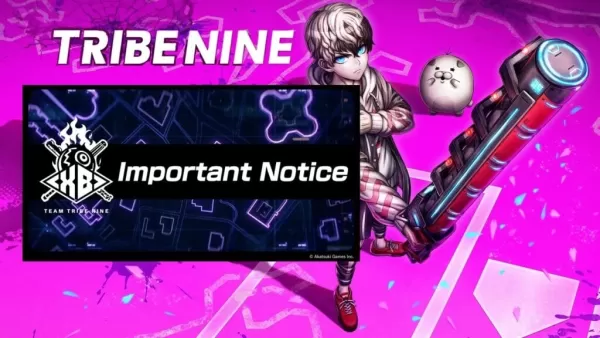
It's truly a bittersweet moment for fans of Tribe Nine—a game that arrived with bold artistic flair, a richly imagined world, and a narrative that promised depth, only to fall victim to the harsh realities of mobile gaming sustainability.
Here’s a breakdown of what happened and why Tribe Nine’s early shutdown is both shocking and, in hindsight, not entirely unexpected:
🔴 Why Tribe Nine Failed — A Closer Look
1. Too Good, Too Slow
Despite its strong visuals and intricate lore, Tribe Nine launched with an exceptionally slow update pace—just one main story chapter and one event in the first three months. For a free-to-play RPG, consistency is key. Players expect regular content drops to stay engaged. The lack of momentum made it hard to retain attention, especially in a crowded mobile gaming market.
2. The Gacha Dilemma: A Poor Fit for the Game’s Design
While the gacha system is standard in many mobile RPGs, Tribe Nine’s design made it a financial liability. The game allowed players to build a competitive team with just one lucky pull, and duplicates were not useful—unlike most gacha games where duplicate units can be fused or used for crafting.
This meant:
- No recycling loop to encourage spending.
- Low player retention of spenders.
- Little to no incentive to spend money repeatedly.
Even strong players could max out their roster with minimal investment—great for fairness, terrible for monetization.
3. Marketing and Visibility Issues
Akatsuki Games has a history with high-quality titles like Goddess of Victory: Nikke and D4DJ All Mix, but Tribe Nine received minimal promotional push compared to those hits. Without heavy marketing, social media buzz, or influencer campaigns, it faded into obscurity even among fans of anime-style RPGs.
4. Market Saturation and Player Fatigue
The mobile RPG space is overcrowded. Games like Genshin Impact, Honkai: Star Rail, and Fate/Grand Order dominate attention. Tribe Nine offered a unique aesthetic and tone, but it couldn’t compete with the massive ecosystems and long-term player communities built by these giants.
5. No Path to Long-Term Sustainability
With no monetization model that rewarded long-term investment, and updates canceled after just a few months, the game never had a chance to build a lasting player base. The revenue stream was too fragile to support ongoing development, server maintenance, or customer service.
💔 What This Means for Fans
- Chapter 4—the final chapter of the main story—will never release, leaving major plot threads unresolved.
- The two new characters, Ichinosuke and Saizo Akiba, were fan favorites. Their absence feels like a betrayal of the game’s potential.
- Refunds for Enigma Entities are a small consolation, but they don’t recover the time and emotional investment many players poured in.
- The game will remain playable until November 27, 2025, giving fans a final window to experience the world they’ve only just begun to explore.
🧩 Final Thoughts: A Cautionary Tale
Tribe Nine was a labor of love—a game that prioritized story, art, and player satisfaction over aggressive monetization. But in today’s mobile landscape, quality alone isn't enough.
It’s a tragic example of how even well-designed games can fail when they don’t align with business models that keep them alive. The irony? The very design choices that made it fair and enjoyable for players were the same ones that doomed its financial future.
📌 What You Can Do Now
- Play it before it’s gone: If you’ve been curious, now is the time. Download it on Google Play, iOS, or Steam.
- Join the community: Fans are sharing fan theories, lore deep dives, and even alternate endings online. The game may be ending, but its legacy lives on.
- Support other indie RPGs: Games like Kenshi, The Outer Worlds: Spacer’s Choice Edition, or Tales of Arise (PC) offer similar depth—just with different business models.
⚠️ Final Note: Tribe Nine’s shutdown reminds us that while the gaming industry celebrates innovation, it often punishes it—especially when it doesn’t fit the mold of what sells.
For more on canceled games and industry trends, keep an eye on our coverage of Kingdom Hearts: Missing-Link’s cancellation—another example of how even beloved franchises can fall to budget cuts and shifting priorities.
RIP Tribe Nine. You were beautiful, bold, and too ahead of your time.
We’ll miss you.