2025 D&D Starter Guide
- By Peyton
- Dec 26,2025
Dungeons & Dragons (D&D) revolutionized tabletop gaming as the original role-playing experience where dice rolls shape collaborative stories. The recent success of Honor Among Thieves and Baldur's Gate 3 has introduced countless newcomers to this legendary game. Now in its streamlined fifth edition (D&D 5e) with updated rulebooks, the game offers the most beginner-friendly entry point yet.
For those seeking simpler alternatives, numerous D&D-inspired board games provide accessible entry points to fantasy adventures.
Essential D&D Starter Kit
Core Requirements:
- Player Group
- Rulebooks
- Polyhedral Dice
- Character Sheets
- Miniatures & Terrain (optional)
- DM Resources
1. Building Your Adventuring Party
A typical D&D session thrives with 3-5 players, though the game adapts to any group size. Each game requires:
- Dungeon Master (DM): The game's storyteller and referee
- Players: Protagonists shaping the narrative through character actions
The DM crafts immersive worlds while moderating gameplay - a challenging yet rewarding creative outlet. Official adventure modules and core rulebooks provide excellent starting points for new DMs.
2. Core Rulebooks
While players only need one book, these three form the foundation:
Player’s Handbook - The essential guide for character creation and gameplay mechanics that remains valuable through all experience levels.
Dungeon Master’s Guide - The ultimate resource for world-building and adventure design.
Monster Manual - Contains hundreds of creatures to challenge players and bring worlds to life.
Starter Sets offer complete entry packages with pre-made characters, adventures, dice, and simplified rules available in physical and digital formats.
3. Polyhedral Dice Sets
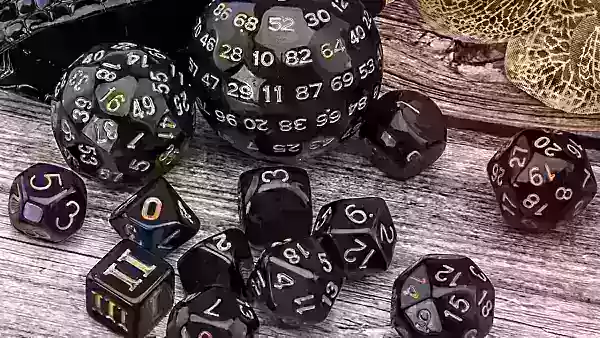
The iconic seven-dice set (d4, d6, d8, d10, d12, d20) drives gameplay mechanics. While one set suffices, many players enjoy collecting specialty dice.
4. Character Documentation
Character sheets track crucial gameplay information, available:
- Included in the Player's Handbook
- As free online templates
- Through digital tools like D&D Beyond
5. Tactical Components
While optional, these enhance gameplay:
- Miniatures: Represent characters and creatures
- Battle Maps: Visualize combat scenarios
- Virtual Tabletops: Digital alternatives including Roll20 and FoundryVTT
- Communication Tools: Discord or Zoom enable remote play
Beginner's Gameplay Guide
Core Gameplay Loop
- Character Creation: Develop unique avatars using Player's Handbook guidelines
- Worldbuilding: DMs establish settings through imagination or pre-written modules
- Collaborative Storytelling: Players rotate describing character actions
- Dice Mechanics: Random chance determines success/failure against DM-set difficulty checks
- Structured Combat: Turn-based encounters with tactical decision-making
Character Development Guide
New players should follow these steps:
- Race Selection: Determines innate abilities and traits
- Class Choice: Defines combat style and special abilities
- Ability Scores: Six core attributes shape character strengths
- Starting Equipment: Gear appropriate to class and background
- Personal Backstory: Motivations and personality traits
Key Game Terms
- Actions: Combat options including attacks and spells
- Initiative: Determines turn order in combat
- Hit Points (HP): Character health measurement
- Armor Class (AC): Defense rating against attacks
- Level Advancement: Character progression through experience
Player Best Practices
- Share narrative focus with party members
- Gradually embrace role-playing elements
- Maintain supportive table atmosphere
DM Mastery Techniques
- Develop flexible scenario planning
- Embrace player-driven narrative twists
- Encourage creative problem-solving
- Adapt rules to enhance enjoyment
- Establish clear session expectations
- Leverage digital tools for efficiency
D&D offers unparalleled creative freedom for storytelling and adventure. With these fundamentals, any group can embark on unforgettable journeys through imagination and shared narrative.
Latest News
more >-
-

-
- "TMNT: The Last Ronin" Release Date Announced
- Apr 21,2026
-
-
- Tower of God and Realms of Pixel Collab
- Apr 16,2026